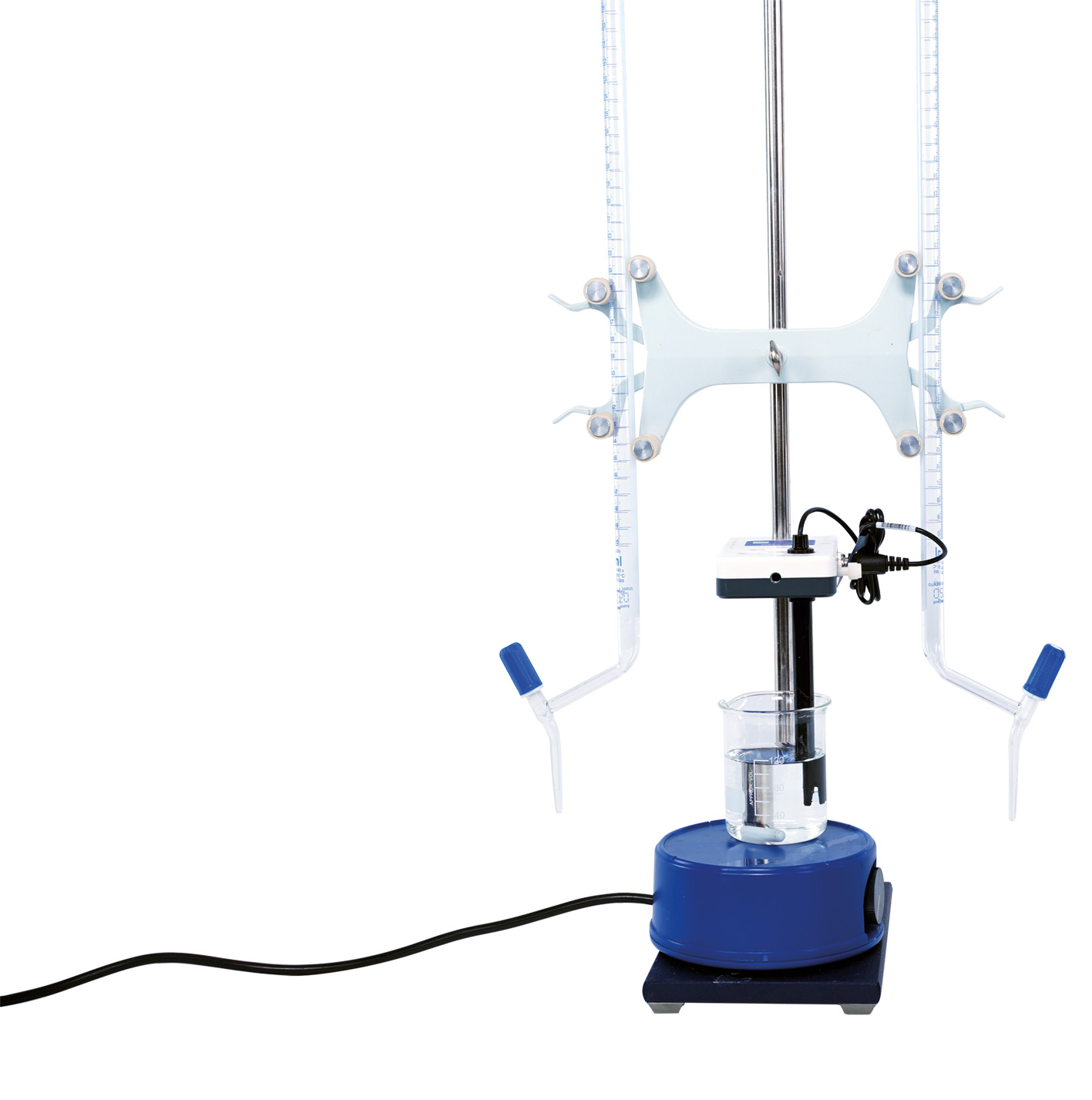
Titration curves and buffering capacity with Cobra SMARTsense
pH values can be measured with the aid of electrochemical measurements and proton-sensitive electrodes (e.g. glass electrodes). By combining a glass electrode with a reference electrode in one housing, a single-rod glass electrode, which is appropriate for acid-base titrations, is created. The titration curves allow an exact determination of the equivalence point in titrations of strong and weak acids and bases. Drop counter optimizes the experimental procedure Simplified implementation: all pre-settings already prepared Extensive automation of the experiment allows concentration on the Determine the titration curves of different neutralisation reactions. Determine the titration curve of an ampholyte (glycine). Determine the buffering capacity of various aqueous acetic acid/sodium acetate mixtures at different total concentrations. Strong and weak electrolytes Hydrolysis Dissociation of water Amphoteric electrolytes Isoelectric point Law of mass action Indicators Glass electrode Activity coefficient Buffering capacity Henderson-Hasselbalch equation Precision balance 6200g/0.01g Software provided. Computer not included.
Need a curriculum quote? Contact our science education team at office@am-sci.com