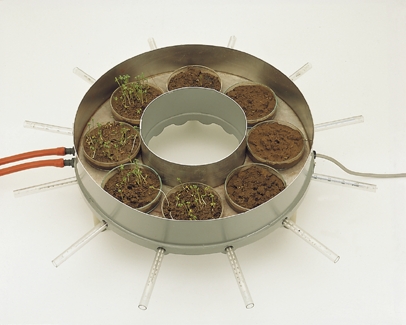
Effect of the soil temperature on the germination and growth of higher plants
Article No: P4060100
Genetically determined growth processes in plants are primarily triggered or inhibited by special phytohormones. However, external factors such as light, temperature, water, oxygen and air humidity play a decisive role in these processes. With regard to temperature, there are ranges within which this environmental factor reaches the most favourable value for germination and growth of a plant (preferential or optimum range, preferendum). The effect of different temperatures on the growth of cress (pepper grass, Lepidium sativum) is analysed in this experiment. Benefits Precise measurement possible with 12 different temperatures Allows to set up a wide temperature range The ring-shaped measurement setup allows an even distribution of all temperature points Experimental setup can also be used for animal experiments Tasks Investigate the effect of soil temperature on the germination of garden cress (Lepidium sativum) Determine the most favourable value for the germination and growth of cress using a temperature organ. Learning objectives Plant germination Temperature optimum/ maximum/ minimum Soil temperature Temperature preferendum As the experiment lasts for several days, the use of a cold-heat circulator (cooling thermostat) is strongly recommended. A conventional circulator is not sufficient for the experiment.