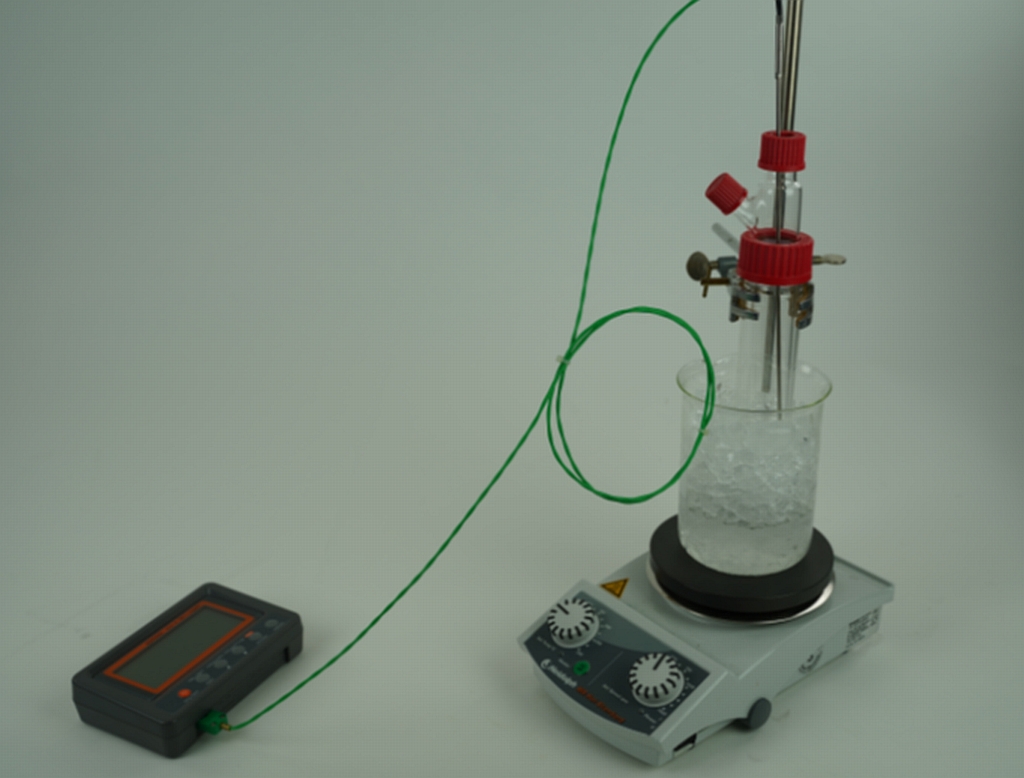
Freezing point depression
Article No: P3021101
Unknown Principle The freezing point of a solution is lower than that of the pure solvent. The depression of the freezing point can be determined experimentally using a suitable apparatus (cryoscopy). If the cryoscopy constants of the solvent are known, the molecular mass of the substance dissolved can be determined. Benefits All relevant measured variables at a glance Experimentation made easy by intuitive operation With detailed experiment guide Tasks Determine the size of freezing point depression after dissolving a strong electrolyte (NaCl) in water. Determine the number of ions into which the electrolyte dissociates. Determine the molar mass of a non-electrolyte (hydroquinone) from the value of freezing point depression. Learning objectives Raoult's law Cryoscopic constant Chemical potential Gibbs-Helmholtz equation Concentration ratio Degree of dissociation Van't Hoff factor Necessary accessories Precision balance 620g/0.001g