Energy dependence of the gamma absorption coefficient / Gamma spectroscopy
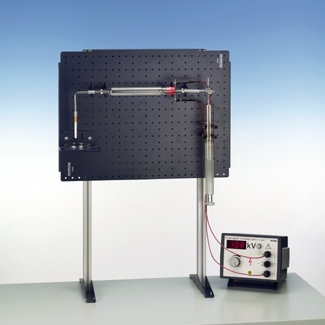
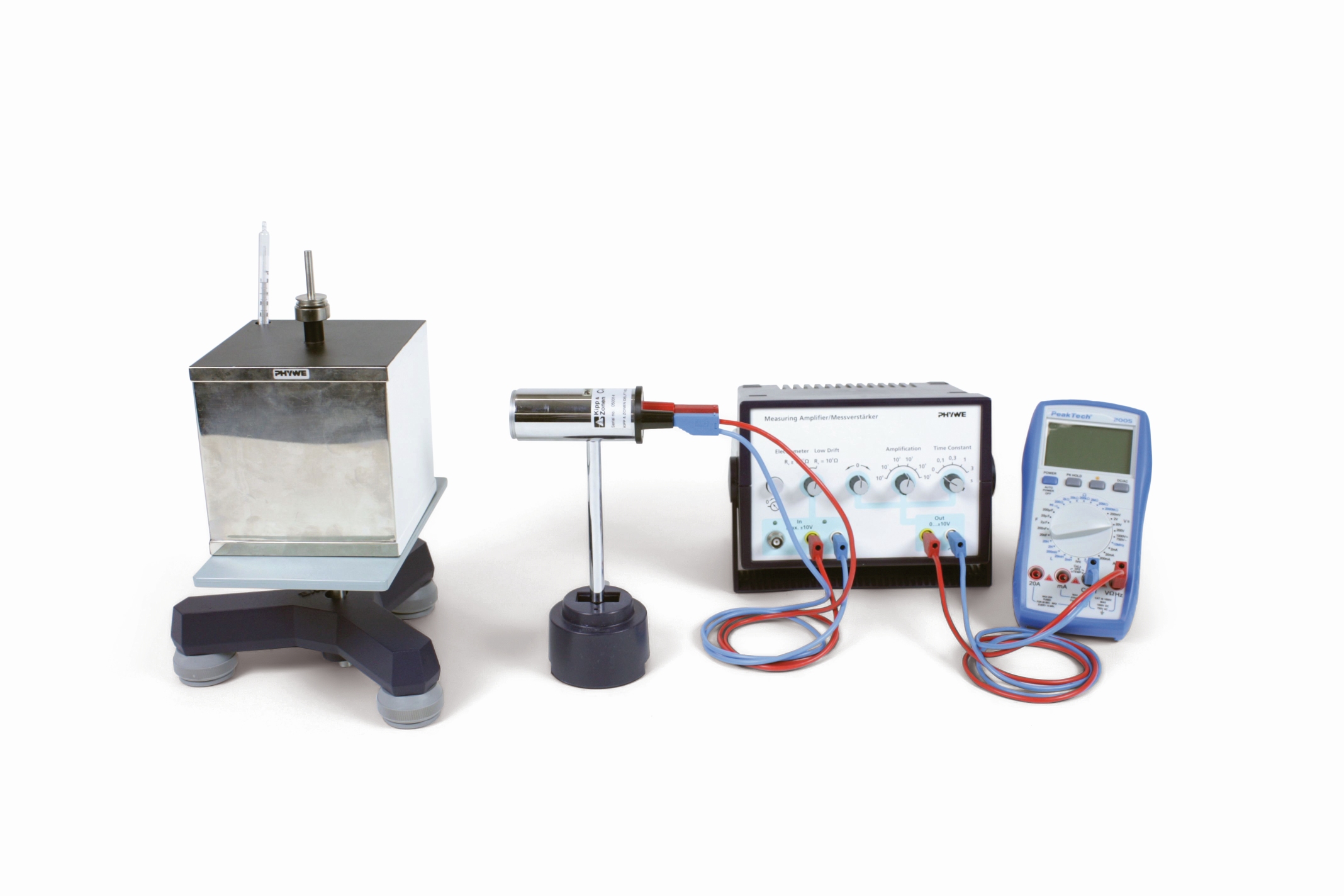
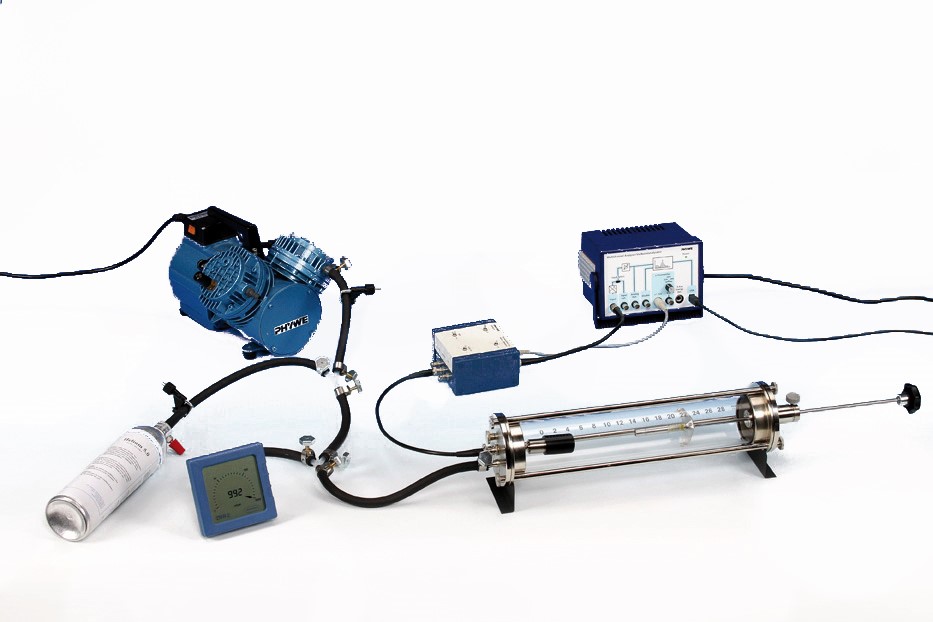
The intensity of gamma-radiation decreases when it passes through solid matter. The attenuation can be the result of Compton scattering, the photo effect or the pair production. An absorption coefficient can be attributed to each of the three phenomena. These absorption coefficients, as well as the total absorption, are highly energy-dependent. The energy dependence of the total absorption coefficient for aluminium in the range below 1.3 MeV is verified. Tasks For each of the emitting isotopes 22Na and 241Am the gamma-spectrum is traced and a threshold energy, E, just below the photo-peak in the high energy range determined. Using the scintillation counter in conjunction with the pulse height analyser as a monochromator, the gamma-intensity is measured as a function of the thickness of different aluminium layers.The three gamma- emitting isotopes are used successively as the source, assuming that the energy of the emitted gamma-radiation is known. Learning objectives Compton scattering Photo effect Pair production Absorption coefficient Radioactive decay g-spectroscopy Software included. Computer not provided.
All units adapted for 110V/60Hz. Contact us for volume pricing and grant assistance.