Available in the U.S. – 110V/60Hz adapted
Exclusive U.S. distributor – American Scientific, LLC
Questions? Call 888-490-9002
University Experiment
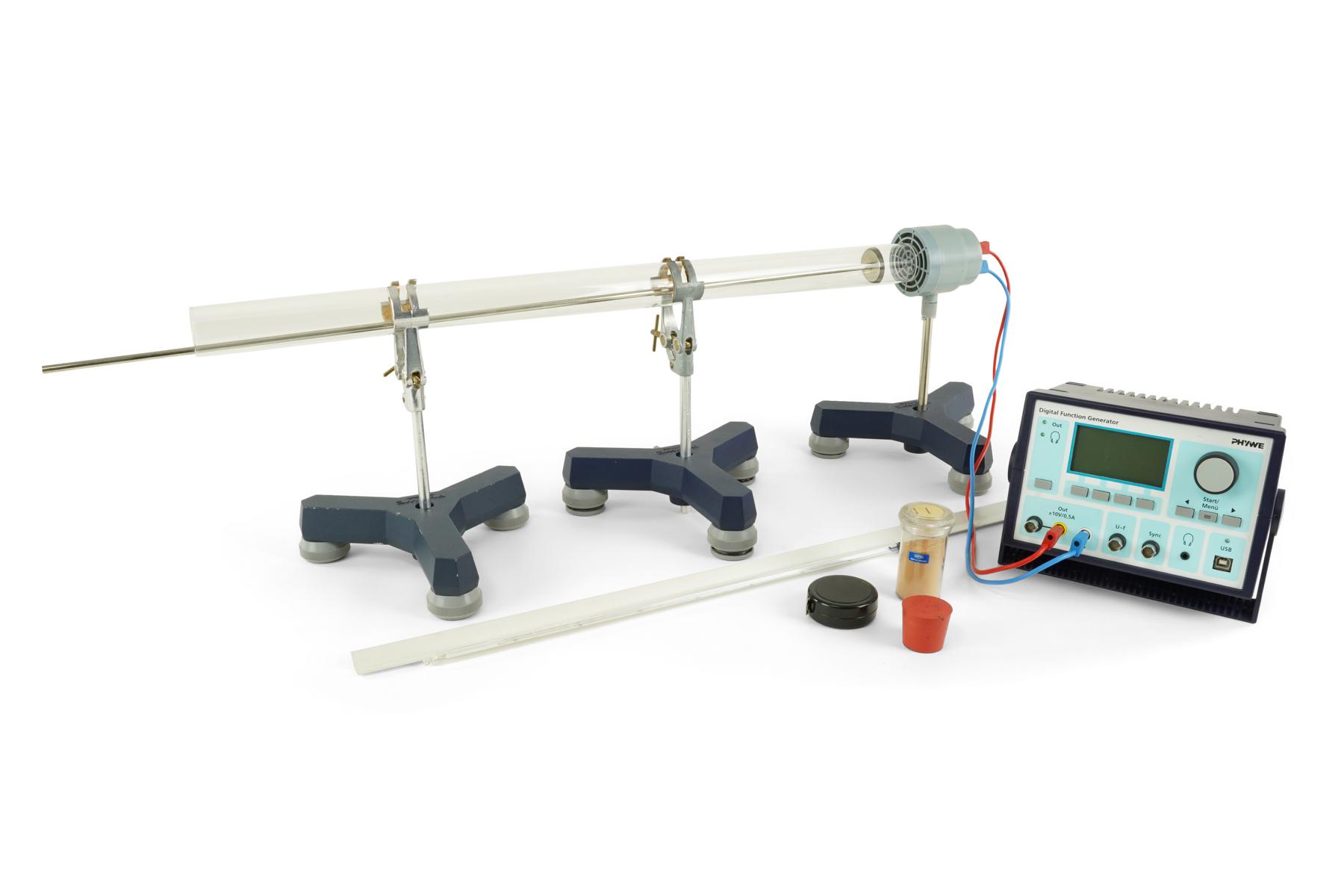
Velocity of sound using Kundt's tube and digital function generator
Article No:
P2150605
Cork dust in a glass tube is set into tiniest motion by a sound wave. If the frequency of the sound wave matches the natural frequency of the volume in the glass tube, a standing wave will form. The cork dust then assembles in visible patterns that show the nodes of pressure and motion of the standing wave. From the length of the volume and the number of the nodes the velocity of sound in the tube can be calculated for each natural frequency.
Key Features
- Two experiments in one: determination of the sound velocity and determination of the wavelength of standing waves
- Easy frequency setting thanks to digital function generator
Available through American Scientific
All units adapted for 110V/60Hz. Contact us for volume pricing and grant assistance.