 American Scientific, LLC · Columbus, Ohio · Exclusive U.S. Distributor of PHYWE Systems
Electrochemistry, thermochemistry, and calorimetry. 110V/60Hz adapted for U.S. labs.

(no description provided)
The vaporisation of a liquid occurs with heat absorption. To determine the enthalpy of vaporisation, a known mass of the liquid which is to be investigated is vaporised in a special vaporisation...
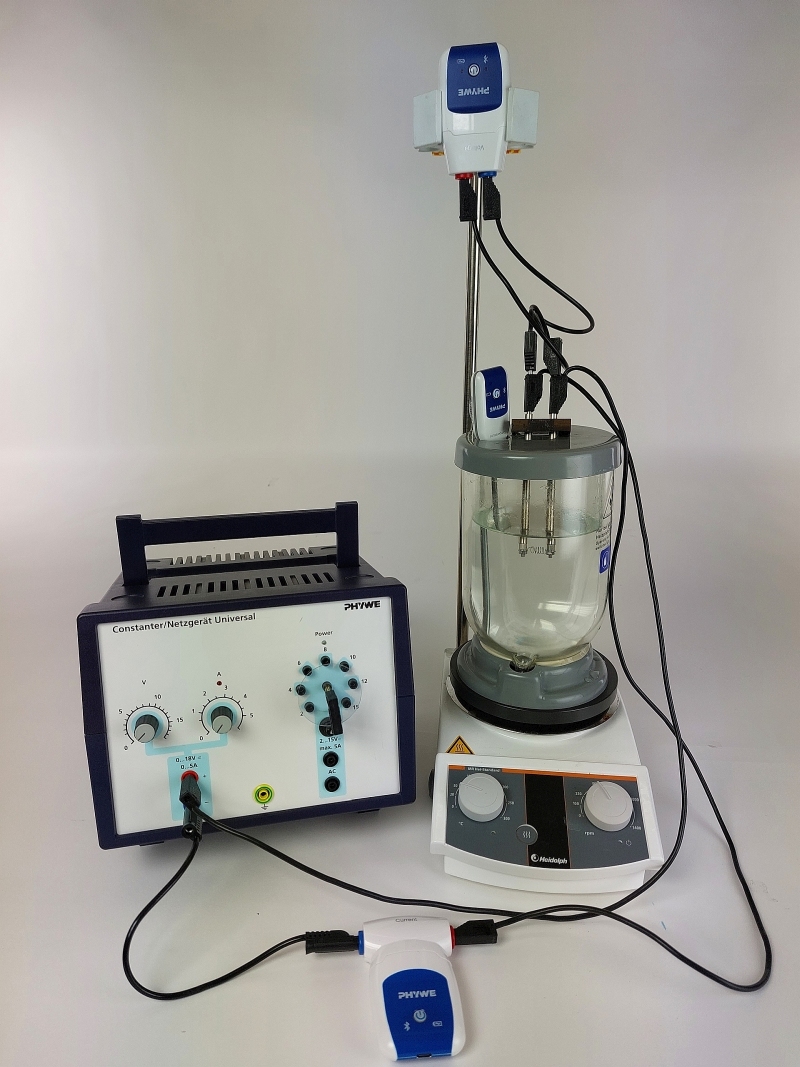
When a solid electrolyte dissolves in water, a positive or negative heat effect occurs as a result of the destruction of the crystal lattice and the formation of hydrated ions.

When a solid melts, energy is required for the destruction of the crystal lattice. A substance whose melting point lies slightly below room temperature is first cooled until it solidifies and then...
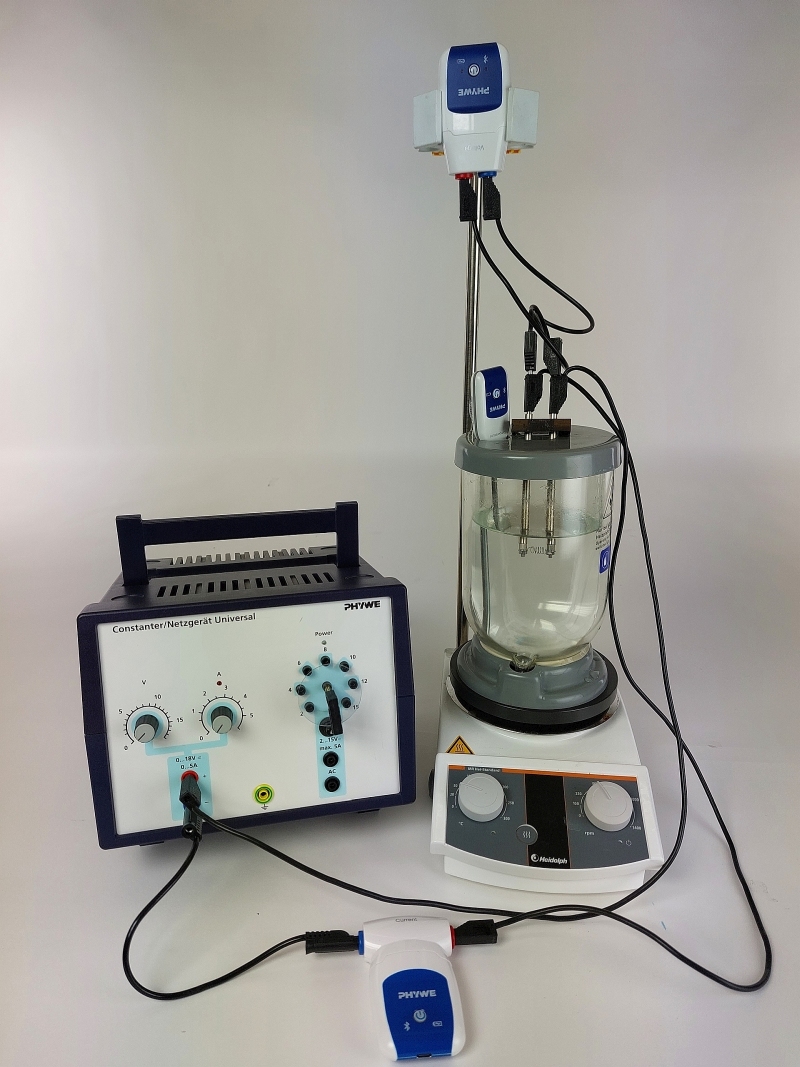
When two miscible liquids are mixed, a positive or negative heat effect occurs, which is caused by the interactions between the molecules. This heat effect is dependent on the mixing ratio.

Whether demonstrating Hess's law or determining calorific values of solids, gases or solid substances.

