American Scientific, LLC · Columbus, Ohio · Exclusive U.S. Distributor of PHYWE Systems
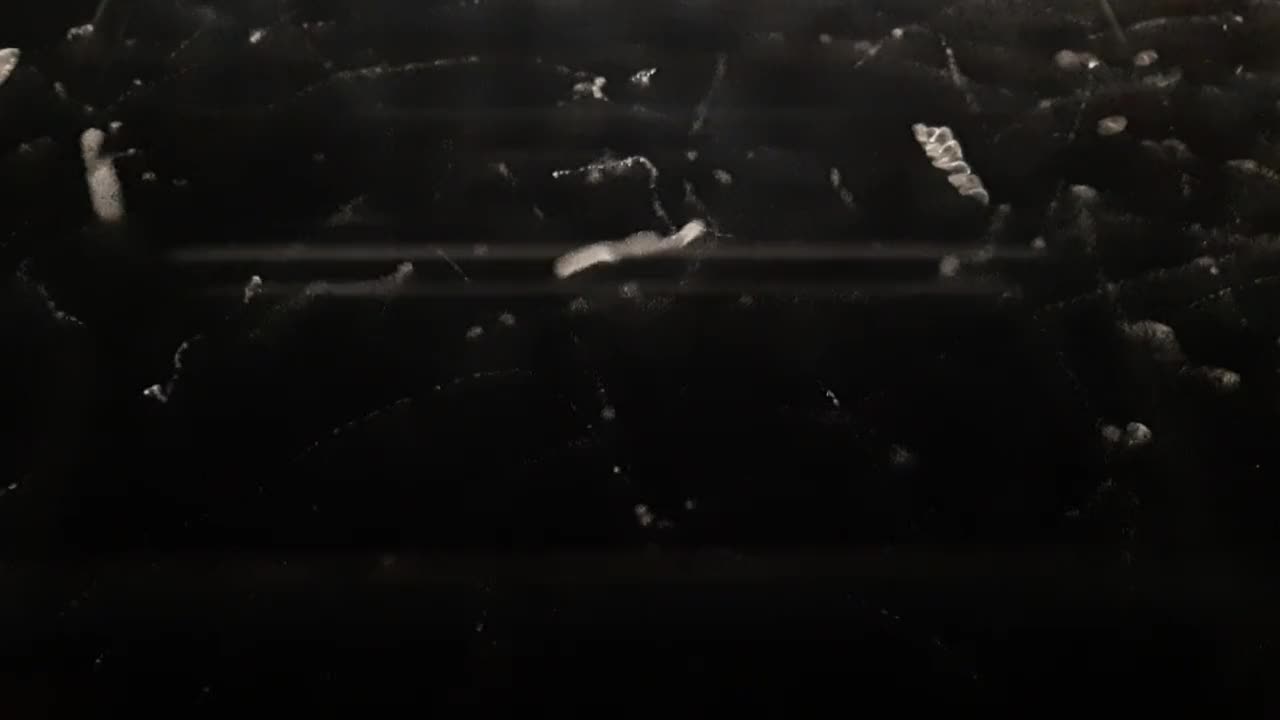
The same 45 × 45 cm PHYWE chamber as our 115 V model, built for 230 V circuits. Tracks from background radiation and cosmic rays appear in real time, with no dry ice.
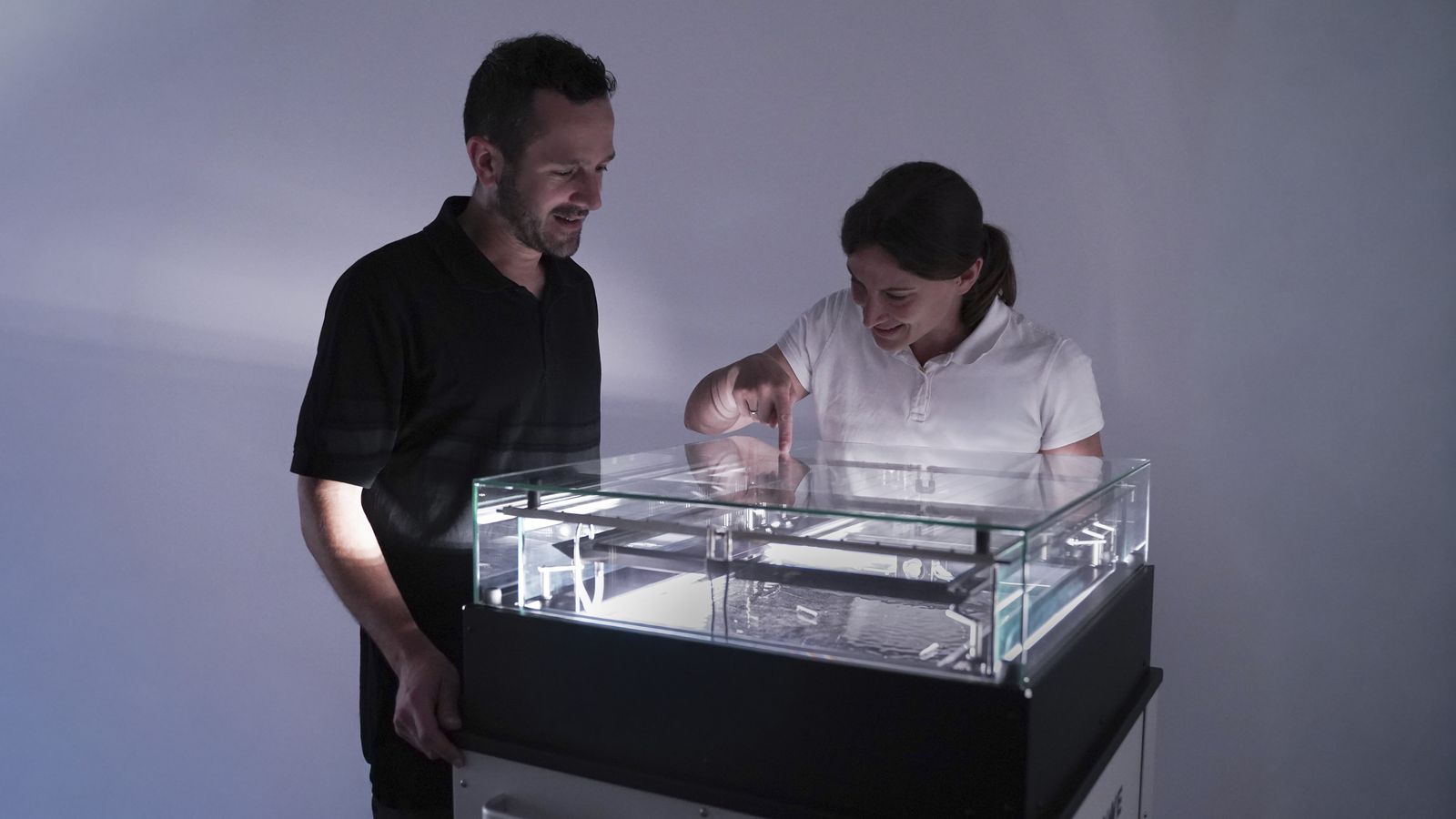

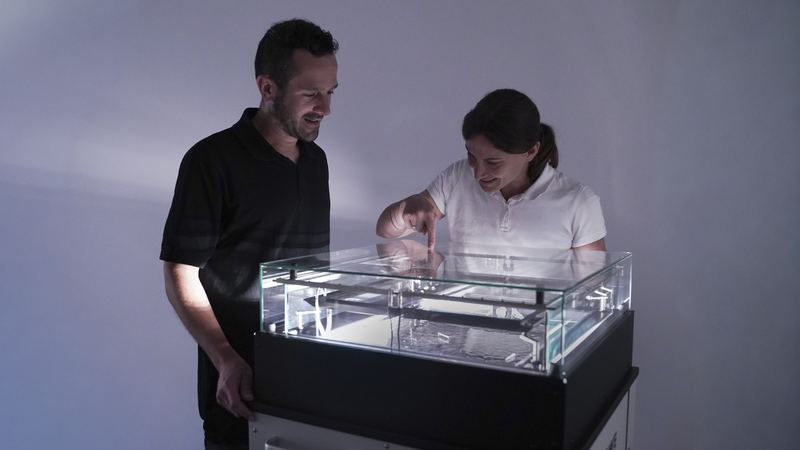
Continuously operating, mechanically cooled chamber for visualizing the tracks of radioactive radiation. It is particularly suitable for demonstrations, teaching, and training purposes and enables clear real-time observation of particle tracks
All units adapted for 110V/60Hz. Contact us for volume pricing and grant assistance.
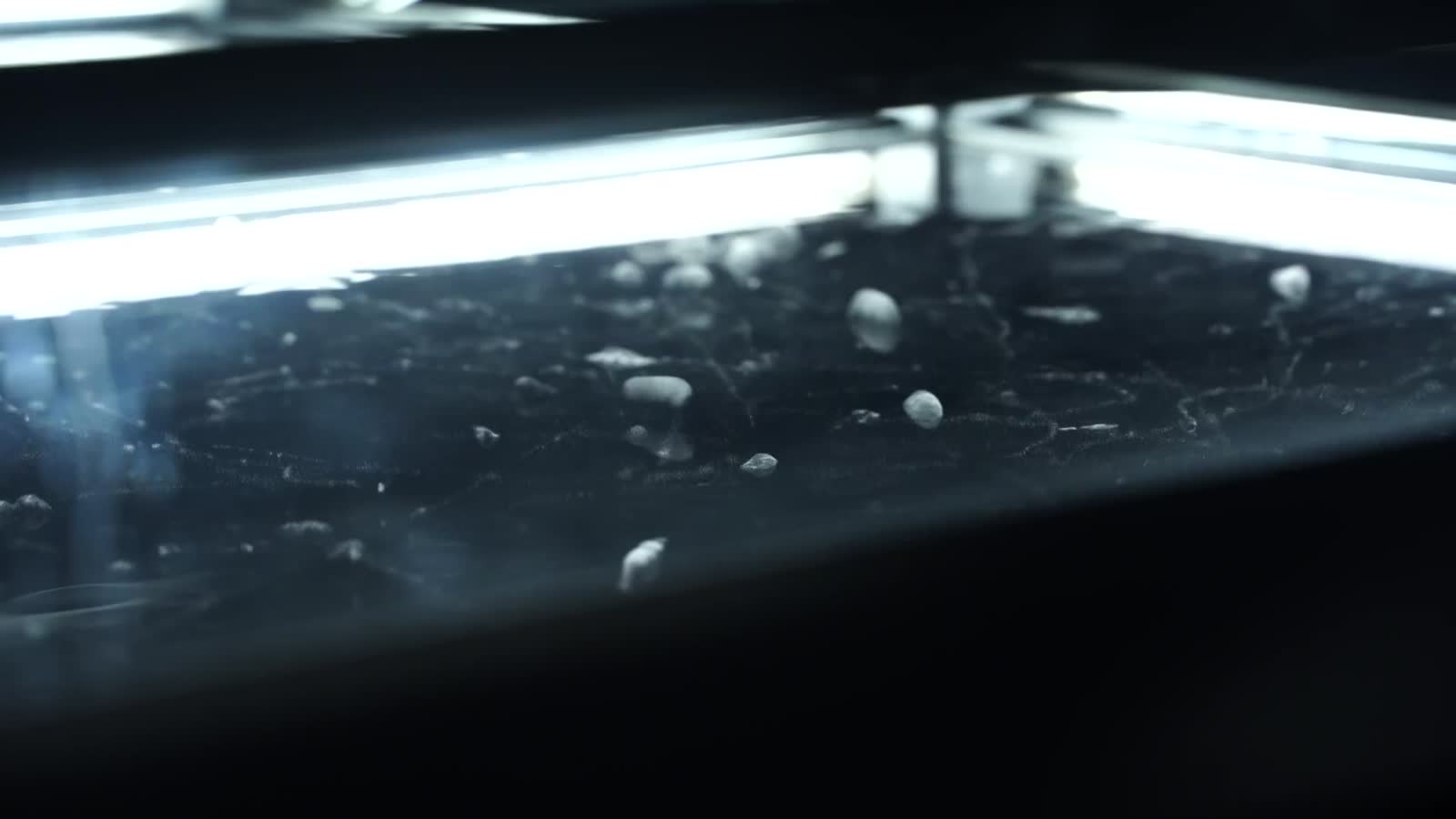
Alpha particles, electrons and cosmic-ray muons from natural background radiation leave trails of condensation in the alcohol vapor. Nothing is staged or simulated: this is what your students see.
The chamber cools itself and builds a layer of supersaturated alcohol vapor under a double-walled glass dome.
Charged particles leave trails of condensation across the 45 × 45 cm observation area.
Compare track length, thickness and shape to tell alpha particles, electrons and muons apart.
Each kind of radiation leaves its own signature. Within minutes, students start calling out what they see.
Alpha particlesShort, thick, bright and straight. Heavy and slow, they stop within a few centimeters.
Electrons (beta)Thin, faint and wandering. Light particles scatter easily off the vapor.
Cosmic-ray muonsLong, thin, straight lines that cross the whole chamber, arriving from the upper atmosphere.
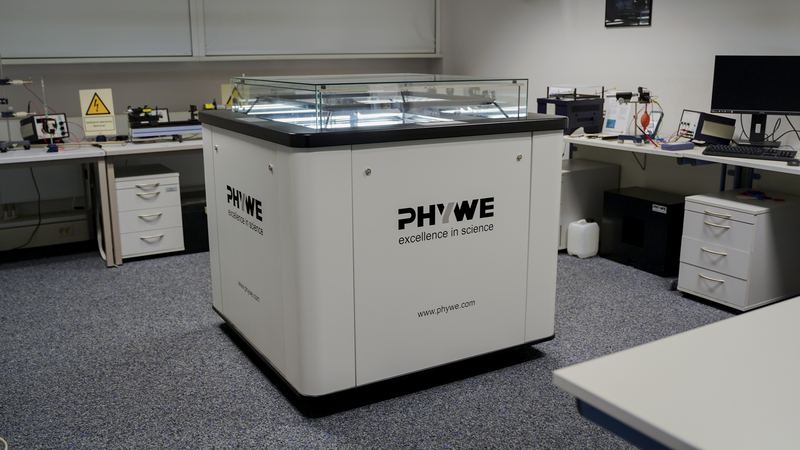
This model runs on 230 V. Many U.S. buildings have 208/240 V circuits available, and our team confirms the right setup for your room before you order. If you need a standard 115 V outlet, the PJ45 115 V version plugs straight in.
No. The chamber shows natural background radiation and cosmic rays on its own. An airlock lets you safely add a licensed demonstration source if you want to show specific radiation types.
Only isopropyl alcohol (2-propanol), which is fed automatically from the built-in tank.
Yes. The built-in timer switches the chamber on and off on a schedule, so it is ready when class starts.
Tell us about your lab in the form above and we'll put together a complete, ready-to-teach configuration, so nothing is missing on day one.
Often, yes. Many institutions fund PHYWE equipment through NSF, Title IV and CTE programs, and our team can help you find and apply for the right opportunity.